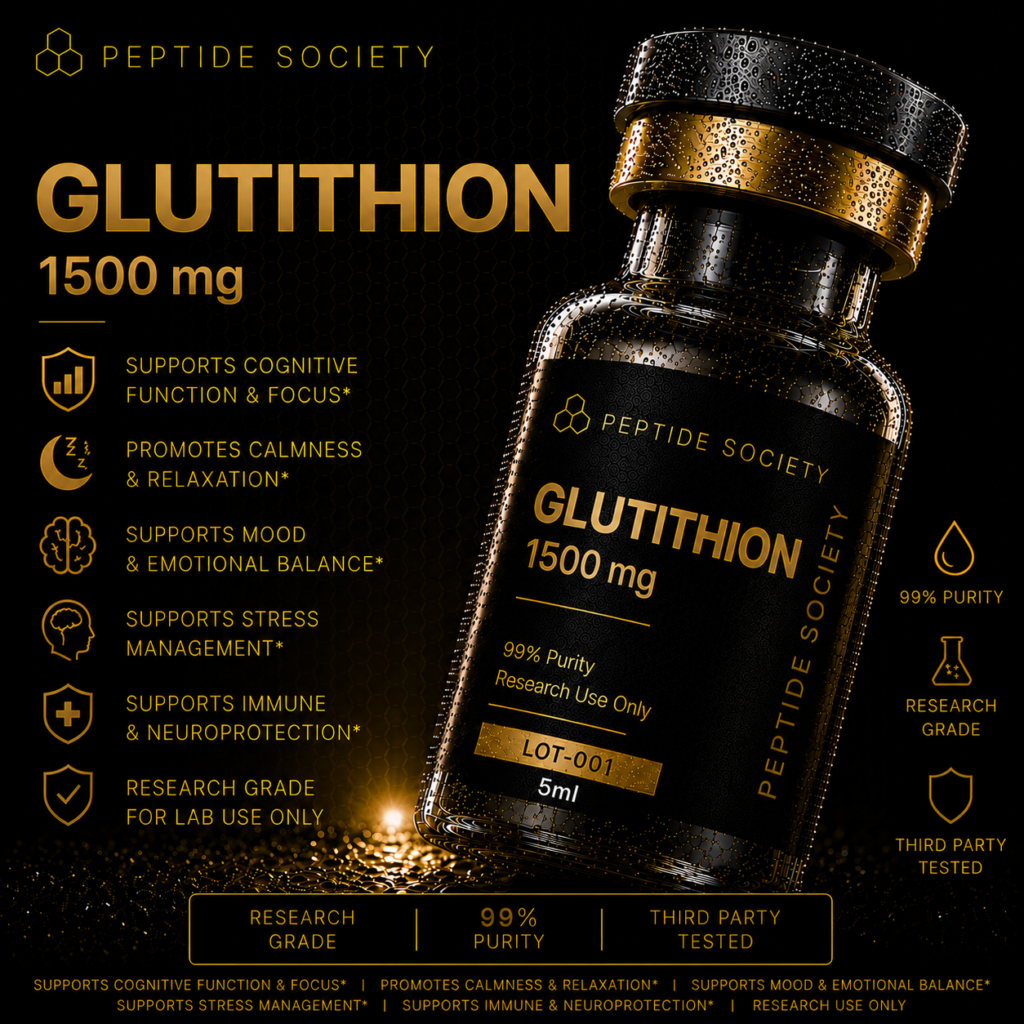
Glutathione 1500 mg
Chemical Specifications
- Form
- Lyophilized Powder
Certificates of Analysis
Product Description
Glutathione 1500 mg
Research-Grade Glutathione 1500 mg
Peptide Society’s Glutathione 1500 mg is a high-purity lyophilized research compound intended exclusively for laboratory and scientific research. Each vial is manufactured to rigorous quality standards and tested for identity and purity to provide researchers with a consistent material for preclinical and laboratory investigations.
Glutathione is a naturally occurring tripeptide composed of glutamate, cysteine, and glycine. It is one of the most extensively studied intracellular compounds due to its role in cellular redox regulation, antioxidant defense systems, detoxification pathways, and overall cellular homeostasis. Because of its broad biological significance, Glutathione remains an important subject of research across multiple scientific disciplines.
Product Specifications
- Product: Glutathione
- Strength: 30 mg per vial
- Purity: ≥99%
- Form: Lyophilized Powder
- Storage: Store refrigerated before and after reconstitution.
- Research Use Only
Research Overview
Glutathione is present in nearly every mammalian cell and plays a central role in maintaining intracellular redox balance. It participates in numerous biochemical processes and has become one of the most widely researched endogenous compounds in molecular biology and biochemistry.
Current areas of scientific investigation include:
- Cellular redox regulation
- Oxidative stress response
- Antioxidant defense systems
- Mitochondrial function
- Cellular metabolism
- Detoxification pathways
- Liver biology
- Immune system signaling
- Aging-related cellular processes
Its broad involvement in cellular function has made Glutathione a valuable research compound in fields ranging from molecular biology to pharmacology.
History
Glutathione was first identified in the late nineteenth century and has been the focus of scientific research for more than a century. Throughout the twentieth century, researchers established its importance as one of the body’s primary endogenous antioxidants and a key participant in numerous biochemical pathways.
Advances in molecular biology have expanded understanding of Glutathione’s role in maintaining cellular homeostasis, regulating oxidative balance, and supporting normal cellular function. Today, it continues to be one of the most extensively published compounds in biomedical research.
Mechanism of Action
Research indicates that Glutathione functions as an intracellular antioxidant by participating in oxidation-reduction (redox) reactions throughout the cell.
Scientists have studied its involvement in:
- Neutralization of reactive oxygen species (ROS)
- Maintenance of cellular redox balance
- Enzymatic antioxidant systems
- Cellular detoxification pathways
- Mitochondrial function
- Protein protection and regulation
- Cellular signaling pathways
Because Glutathione interacts with numerous enzymes and biochemical processes, researchers continue to investigate its role in maintaining normal cellular physiology and responding to oxidative stress in laboratory models.
Animal Studies
Glutathione has been extensively evaluated in animal research across a wide range of scientific disciplines.
Published preclinical studies have investigated:
- Oxidative stress biology
- Liver physiology
- Cellular metabolism
- Aging-related biological processes
- Neurological research
- Cardiovascular function
- Immune system regulation
- Mitochondrial biology
- Toxicology and detoxification pathways
These investigations have contributed significantly to scientific understanding of Glutathione’s biological functions and continue to support ongoing laboratory research.
Findings from animal studies should not be interpreted as evidence of safety or effectiveness in humans.
Frequently Asked Questions
What is Glutathione?
Glutathione is a naturally occurring tripeptide composed of glutamate, cysteine, and glycine. It is widely studied for its role in cellular redox regulation and antioxidant-related biochemical pathways.
What is Glutathione researched for?
Researchers investigate Glutathione in studies involving oxidative stress, mitochondrial biology, cellular metabolism, detoxification pathways, liver physiology, immune signaling, and general cellular function.
What purity is Peptide Society Glutathione?
Every vial contains ≥99% pure research-grade Glutathione.
How should Glutathione be stored?
Store refrigerated before reconstitution. After reconstitution, continue refrigeration and follow established laboratory handling procedures.
Does this product include laboratory testing?
Yes. Every batch undergoes quality testing, and batch-specific Certificates of Analysis (COAs) are available.
Is this product intended for human consumption?
No. Glutathione 30 mg is supplied strictly for laboratory research purposes only. It is not intended for human or veterinary use, diagnosis, treatment, or therapeutic application.
Research Use Only
This product is intended exclusively for laboratory and scientific research by qualified professionals. It is not a drug, food, cosmetic, or dietary supplement and has not been approved to diagnose, treat, cure, or prevent any disease.
Not for Human Consumption · Research Use Only
This product is intended solely for laboratory research. It is not a drug, food, or cosmetic, and is not intended for diagnosis, treatment, cure, or prevention of any disease.
Related Products
GLP3 30mg
CJC-1295 + Ipamorelin 10mg